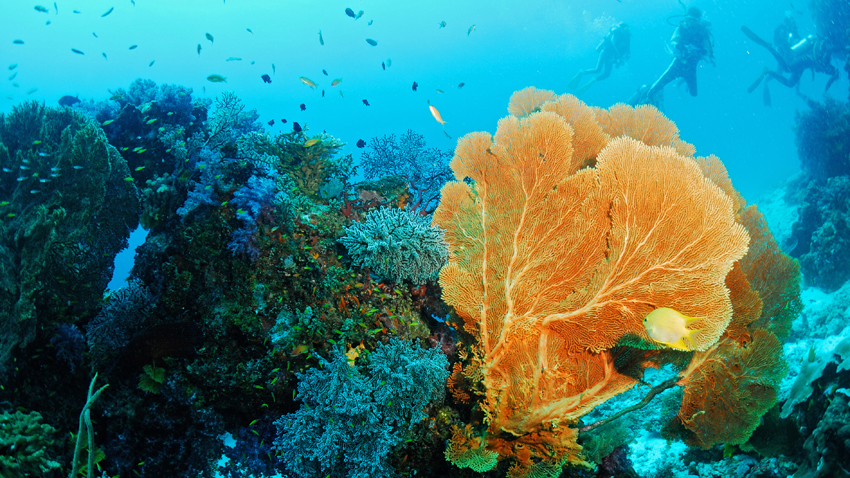
Most travelers visit the Similan islands either for scuba diving or snorkeling. Therefore, through the years Similan diving safaris has become one of the main activities on the Similans. It is because of the extravagant marine life and pristine underwater landscape that attracts divers from around the world. Similan Islands diving is famous all around the world and nominated high in the top dive destinations. It is because of the Andaman Sea is creating perfect water conditions that make the underwater visibility extremely high and suitable for diving and snorkeling. The seawater has an average temperature of 25 degrees Celsius, which is perfect for dive safaris. This makes it possible to dive without a wetsuit in most of the Similan reefs. The Similan Islands diving season start around October and ends in May depending on the weather.
Conditions and eligibility need checking for your actual departure: the older descriptions below are not guarantees of visibility, calm water or wildlife sightings. Read the practical diving notes alongside the site descriptions. For surface swimming, use the separate snorkelling guide.
The multiple diving spots in the Similan Islands all carry unique features such as stunning coral reefs and giant underwater boulders to explorer. In combination with a spectacular wildlife such as Whale Sharks, Manta Rays, Sharks and millions of colorful tropical fish the Similan Islands dive sites are chosen numerous times as top diving destination in the world by National Geographic, BBC and more leading travel media. In this article we’ll create an overview of the to diving spots in the Similan Islands.
Similan diving, where to find the best scuba spots?
Similan Islands diving is well known all around the world because there are numerous spots that offer unique underwater features. We will tell you exactly what you can expect of each diving spot so you can plan your dives in advance. Either professionals or starters can do diving in the Similan islands, since there are multiple Similan dive centers on different islands that offer various dive courses. It is also one of the few places that make tech diving in Thailand possible.
Koh Similan Island diving
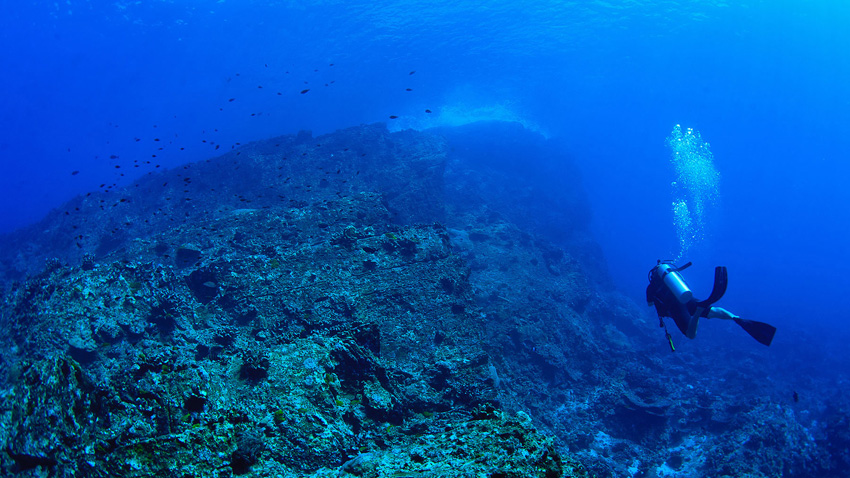
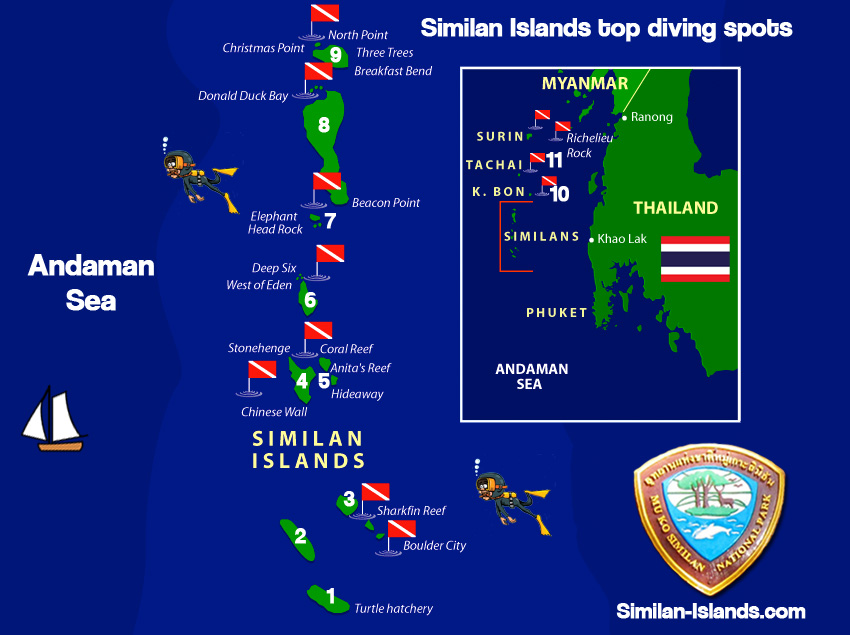
On the Island of Koh Similan you have multiple coral reefs and boulders that are popular diving spots. The best places to start your diving experience in Koh Similan are the Donald Duck Bay or Beacon Point. The Donald Duck Bay is famous for its looks above and underwater. You will be able to spot multiple green turtle species, crustaceans, gastropods, Moray Eels at night and various arrays of shrimps. Beacon Point is a very good diving spot for multilevel divers since you can drop down to 40 meters below the surface. It offers stunning boulders and hard corals. Don’t want to dive you can always get your snorkel gear and explore the shallow waters around the beautiful bays of Koh Similan. The best Similan Islands diving spots are waiting here to be found and explored.
Dive spots around Koh Tachai
The island Koh Tachai is one of the most popular diving destinations in the Similan Islands. It is also easily accessible via the mainland when you are staying in Khao Lak. Koh Tachai offers various diving spots that are worth to explore such as the Koh Tachai Plateau. Additionally it is close by the beautiful Richelieu Rock diving spot. This is a large horse-shoe shaped site with huge pinnacles surrounded by smaller jutting rocks. The place is full of soft corals, anemones, barrel sponges and large sea fans. You can find Whale Sharks here for most of the year.
Scuba dive on Koh Bon
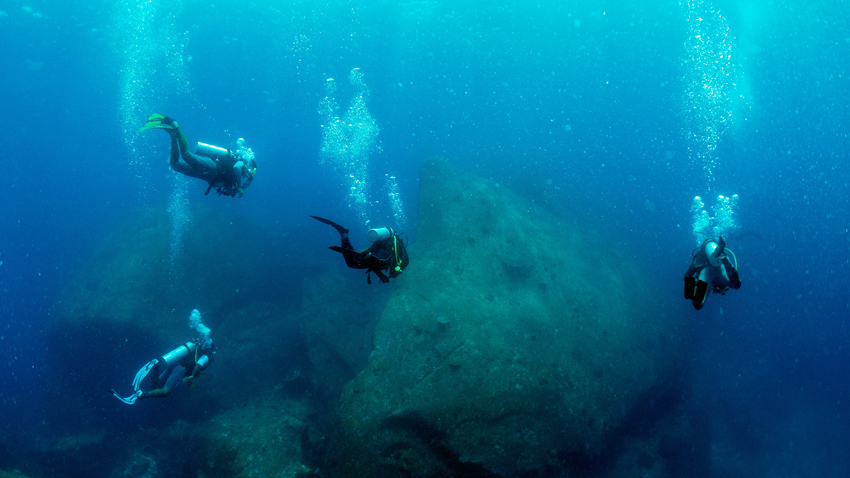
Around one hour or so by boat north of Koh Tachai you will find the island of Koh Bon. This island is famous for seeing Manta Rays all year round. It is a diving spot for advanced divers since the currents are stronger here than on any other island. The average water depths are around 5-40 meters with a minimum visibility of 15-40 meters! Best to limited your movements when you approach a Manta Ray because when they feel threatened by sudden movements they will swim away and find another place to feed on plankton. You can also find various types of sharks, eagle rays and sometimes a Napoleon wrasse here.
Top Similan Islands diving spots
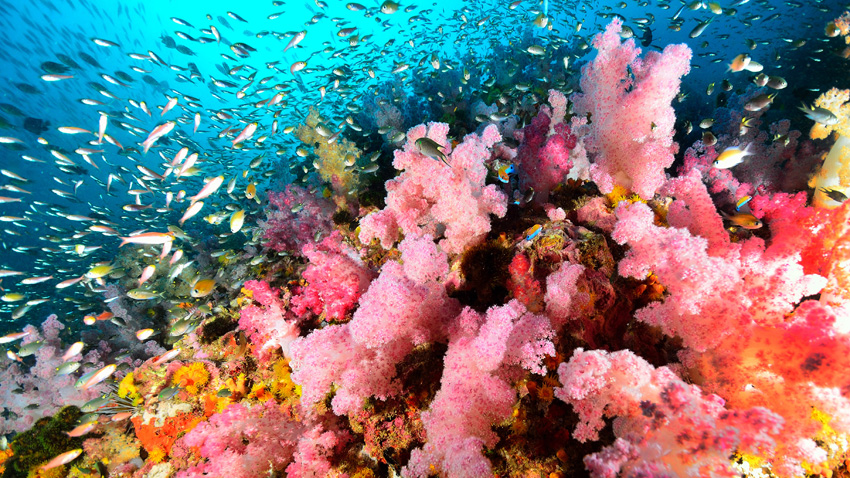
The coral reefs of the Similan islands are Thailand’s best and most diverse underwater attraction offering gigantic sea fans and gorgonians, amazing soft corals and giant table coral formations. In the water as clear as gin you are guaranteed encounters with the most beautiful of tropical fish and marine life: from the smallest critters to giant manta rays and whale sharks. The top Similan Islands diving spots are Elephant Rock, Christmas Point, Fantasy Reef, Richelieu Rock and the famous Andaman Reef.
Elephant Rock
The Elephant Rock is the most “famous” dive site at the Similans Islands. The name originates from a rock formation of three that break the surface on the Island of Koh Similan, with the largest of the rocks resembling an elephant head. You will find fish and corals in all shapes and sizes matching the colors of a rainbow.
Christmas Point
Christmas Point offers a spectacular series of underwater pinnacles. The best spot of the area is around 24 meters deep where you encounter the coral gardens. Diving Christmast Point offers exciting tunnels formed by large rock formations and massive boulders where you can find various large fish such as Pelagics taking a “nap” in the crevices.
Fantasy Reef
The favorite of many divers is Fantasea Reef, which offers enormous rocks, some as large as houses that create a spectacular underwater landscape attracting large amounts of fish. The curious and beautiful looking Clown Trigger Fish is one of its natives and you will be able to spot stingrays congregating on the sandy bottom.
Richelieu Rock
Richelieu Rock is a large underwater granite pinnacle that rises steeply from a depth of around 40 meters. It barely breaks the surface making it a navigational hazard for boats of all sizes. This diving spot is incredible and offers a large number of anemones, sponges of all shapes and sizes. The soft corals carry the colors of the rainbow and are lining up on the rocks. This is also one of the best Similan Islands divings spots to see the majestic whale sharks basking in the waters.
Andaman Reef
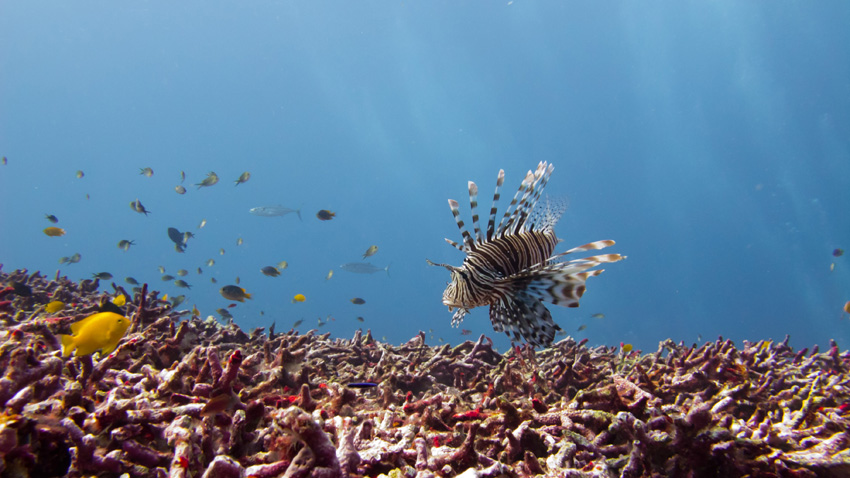
Large numbers of reef fish and shoals of barracuda, jacks, Giant trevally, and other pelagics patrol the Andaman Reef. Huge coral heads scatter the sandy bottom and healthy stag horn coral provide shelter for smaller fish, Moray eels and Lionfish. It is an excellent site for the underwater photography.
Anita’s reef diving site
Anita’s reef is classified as a deep dive and one of the best Similan Islands diving spots. It offers majestic rocks that are teaming of corals and marine life. Read more about Anita’s reef here.
Snorkeling in Thailand’s most beautiful reefs
Take a chance to explore the diving Similan Islands by snorkeling around in one of the most beautiful areas in Thailand. Similan snorkeling is fun for all ages since the waters are warm and calm.
Match the diving to your experience
The site descriptions above are a starting point for a conversation with a dive operator. They are not a guarantee of access, visibility, water temperature or gentle current on your dates. Ask which sites the boat expects to visit and whether those dives fit your qualification and recent experience.
Tell the centre when you last dived and how many dives you have logged. Discuss a refresher before the trip if needed. A qualification card alone does not describe how comfortable you will be with an entry from a boat, changing conditions or a deeper site.
Day boat or several nights aboard?
A day trip suits someone who wants to return to the same hotel. Compare the road transfer, sea journey, dive count and actual underwater sites before deciding. A liveaboard gives a different schedule: repeated dives over several days and nights aboard, with routes that may continue beyond the central Similan group.
Richelieu Rock is in Mu Ko Surin National Park, although it is frequently combined with Similan-area diving. Use the regional and dive maps to distinguish the sites. The location name in a package title does not tell you which park charges apply.
Depth, current and the boat’s requirements
Manta Queen 1 requires certification to 30 metres, or an appropriate onboard upgrade for Open Water divers. That is a requirement of that programme, not a rule to apply to every Similan dive boat. Ask how an operator handles a diver who is not ready for one of the planned dives and whether there is a suitable alternative.
Agree equipment hire in advance, including suit, dive computer and sizes. Do not use a general description of warm water as a reason to omit exposure protection. The boat’s dive team can advise for its programme and the conditions it is encountering.
Practical diving questions
Can a beginner dive at the Similans?
Ask a qualified centre about a suitable course or supervised programme. A snorkelling ticket does not provide a beginner scuba experience, and an operator accepting beginners does not make every site a beginner site.
Can I dive at Anita’s reef with Open Water?
Discuss the planned depth and conditions with the operator. The Anita’s reef description introduces the site; your qualification limits and the day’s briefing still govern the dive.
Is the park open for diving all year?
No. Use the current seasonal dates and check the boat’s own calendar. Individual sites may have restrictions within the open season.
Can a snorkelling companion join?
Possibly, if the product accepts non-divers. Ask whether it includes appropriate snorkelling stops and supervision, rather than only a place aboard.
How should I arrange my flight afterwards?
Plan it around the final dive and the no-fly interval required for your diving programme. Discuss this before booking flights, especially after several diving days. Returning to the pier does not reset the clock.